Disruption

Wine pairings. Beer pairings. Soft drink pairings?

Have a look at this picture captured at a Burger King soft drink dispenser.

Bk_2

In an age of wine pairings, beer pairings, and even coffee pairings, do we really think this soft-drink pairing chart will persuade many customers which soft drink to pair with their 1200-calorie sandwich? Do we think the King really spent hours trying to figure out which soda fully complemented your paper-lined, vinyl tray dining experience?

Probably not, but this sticker got a reaction from me, and in a world where the consumer has been conditioned to ignore thousands of marketing messages a day, that’s a good thing.

What's more, this pairing chart brought the irrelevant tone and spirit of the advertising into the store in a natural way. A more obvious approach, to instead say Coke® is Refreshing with a Whopper®, would appear corporate and patronizing. We hand it to Burger King for small details that make a difference.

- Contributed by Tony Fuller


What's in your handbag?

There is a new book out from a small research consultancy called InsightFarm that takes an intersting look at the contents of America's handbags.  Called In your purse - Archeology of the American Handbag, it contains not only the findings of the study and the insights derived, but also some ideas that are ripe for manufacturers and retailers to take hold of to improve the world of the handbag (and the women who carry them around).

Kelly Styring of InsightFarm has also put a video of the study on youtube.

This is a fascinating study that presents lots of opportunities for innovation. I thought about trying to write a bit of an overview of the work, but there is so much in it, such interesting richness, justice could not be done. I recommend you take a look at the book.

Conversation to drive shopping - an experiement II

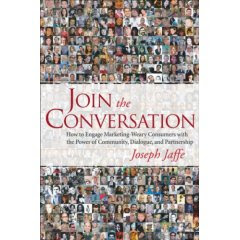
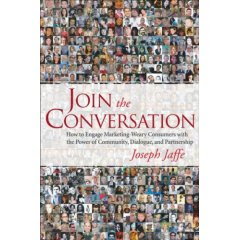
It has taken me too long to get to my promise of reading this book. My mistake, as if you have even a vague interest in how to ensure your brand is a success in the future then I recommend you give this a read.  Joseph Jeffe (who also wrote Life after the 30-second spot) has set up this experiment to use new marketing to prove the power of new marketing.  In taking part, I owe everyone a review of the book.

I'm not sure Joseph's writing style is to everyone's taste but the fundamental point about the change in the landscape brands now play on and the need to re-think how we engage people is well made and an important contribution to modern marketing.

So what did I learn from the read, given that the purpose of this blog is to host a discussion?  Well, this is a book about change, evolution, adaptation and experimentation.

- It reminded me of how we all change our mentality when we cross the threshold of our places of work. We have conversation outside the building - inside, we tend to push out reams of (often) meaningless communication in the eyes of the intended recipient.

- That to partake in a conversation, you have to have something interesting to contribute - a challenge for many. How many brands in the world could hold an interesting conversation at a BBQ? Or in the aisle of a supermarket? And it's not about just opening your mouth, you have to have something to say.

- That many brands do not understand the notion of audience - otherwise the aggressive or de-humanising stance that some advertisers take would be less prevalent. Remember guys, we're all audience to something, we all talk.

- That whatever we do, brands are increasingly bouncing in the market (spoofing, generating echoes) - or they should be looking to do so. Joseph talks of the 'movement of parts of the conversation that alter and shift every time they hit the dirt'. (Although I felt the notion of a Chief Conversation Officer as a new role slightly sinister for some reason).

- The importance of listening in conversation.  Something we've been doing  bunch of work on in the Insight & Strategy Group here in Denver.

There are also some useful and funny stories of brands slapping their customer's for using them. I'm sure they won't bring the organisations down, but they provide useful learning for others.

The conversation carries on in a number of places.  First off there is the site that accompanies the book, there is Joseph's excellent blog (and his podcasts are also worth a listen) which Morgan is an advocate of, and you can also join the Facebook group. I have also posted a similar review here.

And if you happen to be in close geographic proximity to me, or you're first to comment and ask, I'd be happy to lend you my (slightly dog-eared) copy. But I do suggest you buy yourself a copy for your own bookshelf from amazon.com.

Conversation to drive shopping - an experiement

A much respected commentator and author on all things marketing, Joseph Jaffe, is running a small experiment to improve the sales of his current book. The intention is to see if the power of the network and social marketing is all we believe it is going to be in terms of influencing purchase behaviour. 

In October 2007 Joseph published a new book entitled "Join the Conversation".   Following the success of his previous books in generating reviews with other bloggers Joseph is, once again, trying to see if he can get his book on the best seller list by practicing what he preaches. Namely, using the power of conversation among networks to improve the level of purchase. He has named it UNM2PNM (Using New Media to Prove New Media). As his blog says...

'The underlying thinking behind this effort was that I would use the very approaches in my book to help market it and in so doing, would turn the book into its own case study.'

Obviously that kind of thinking appeals to us at Integer, and Joseph has offered a free copy of the book to different industry bloggers in return for their honest review of it. So we are going to be reviewing the book in the near future and take part in the experiment to try and use the power of this network and the conversation generated here can help to influence and encourage you all to shop for it (assuming it is any good of course).

It will be interesting to see what happens given the amount of book clutter that exists and free IP that is generated in the blog sphere - will the power of social media that we expect be able to move the needle and encourage greater purchase?

In the meantime, if you want to grab a copy of the book for yourself in advance, you can do so at amazon.  And do let us know if you buy a copy as a result of this post alone.

Give One Get One

Picture_4_3
From now through December 31, 2007, One Laptop per Child (OLPC) is offering a Give One Get One promotion in the United States and Canada. For a donation of $399, one XO laptop will be sent to empower a child in a developing nation and one will be sent to the child in your life in recognition of your contribution. The XO was designed with real world extreme environmental (like high heat and humidity), and technological issues (like local language support) in mind. As a result the XO laptop is extremely durable, brilliantly functional, energy-efficient, responsive, and fun. This is the first time the XO has been available to public for purchase. 
Picture_6_2

Up to $200 of your donation may be tax-deductible (your $399 donation minus the fair market value of the XO laptop you will be receiving). To top it off T-Moble has partnered with the program to offer all U.S. donors one year of complimentary HotSpot access. The T-Mobile offer is valued at $350 and the HotSpot broadband internet service is available at more than 8,500 locations. Tmobilehotspot

Retail at music gigs

As a fan of live music, and a musician myself, I recently made my way to the Fillmore Auditorium where the Brian Setzer’s Orchestra was performing. Brian Setzer has performed with a number of guitars, but his primary “ax” is a Gretsch “Hot Rod” – a flashy hollow-body that Setzer designed to his own specifications. Brians
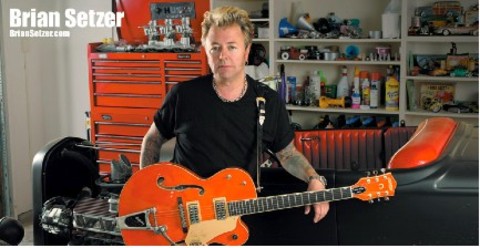
 

Gretsch markets and sells the “Hot Rod” as a signature model within the Brian Setzer series.  Of course, as a consumer, you can only purchase a brand new “Hot Rod” at retail outlets like Guitar Center.

What's this got to do with retail?

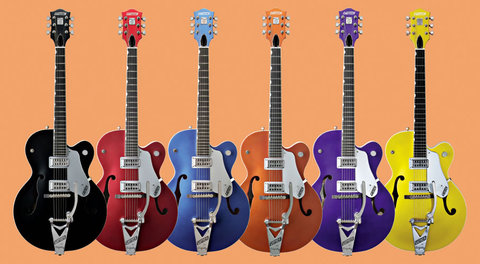
I wasn’t at Guitar Center when I recently encountered the “Hot Rod” – I was at the Fillmore.  Prior to the acts beginning, I spotted a Gretsch Guitar “pop-up” display positioned around stage right.  The pop-up featured a large graphic panel highlighting the cover of Brian Setzer’s latest CD and an even larger image of Brian himself cradling a vintage Gretsch guitar. Below was a rather large assortment of the Gretsch guitars - beautifully shimmering in a variety of luscious colors.


Neither Gretsch or Brian Setzer are brands of the masses – they can’t compete on that stage.  To that end, marketing has to be targeted and the messaging truly engaging. Communicating within an active environment where consumer are open, receptive and can interact with the brands on a purely emotional level heightens consideration.  Breaking through the clutter and noise at traditional retail outlets like Guitar Center or Virgin Music isn’t efficient for these brands or meaningful to the consumer.

While the messaging was specifically targeted at Setzer fans and Gretsch guitar enthusiast, the venue provided natural transitional moments (waiting for the show to start or that time between acts) where consumers felt comfortable interacting with the brand.  How often do brands try to reach us when we are rushed or the setting isn’t natural?

Equally, how often do celebrities endorse brands where the endorsement feels neither real nor relevant? Is a Buick really the car of choice for Tiger Woods? He knows golf inside and out, but what is his credibility with cars?

Brian Setzer knows guitars.  Brian Setzer designs guitars.  Brian Setzer shreds a guitar like no one else.  Brian Setzer plays Gretsch.  I get it.  I believe it.

So, to rephrase the question - is this retail?

At The Integer Group, we have started to think of retail as: 

“Any environment (physical or virtual) that has been constructed to process or facilitate an exchange of items of value (transaction).”
G6120shb_xl

This certainly was a physical environment and the intent was to elicit a transaction between audience and brand – I gave my time and Gretsch allowed me an intimate product experience.  I also gave something else.  Next to the row of glittering guitars was a computer kiosk.  Many of us enthusiastically gave away our names, addresses and e-mail addresses for a chance at winning a Brian Setzer autographed signature Gretsch.

Later comes the true test of audience/brand engagement.  Buying a Gretsch represents a high involvement purchase – they run about $3,000.  None of us at the Fillmore were prepared to pull out our debit cards and take one home, but I imagine (and hope) I will soon start getting e-mails and further messages from Gretsch as they have now pegged me as someone hopelessly climbing from consideration (yeah I would like one) to intent (damn, I need one).

Gretsch wasn’t selling that night and no one was making a purchase. What they did do was to place a permanent brand image squarely within the right hemisphere of my brain – the part where creativity flourishes and any inkling of reason and rational decision-making is noticeably absent.  For me, my aspiration of owning a Gretsch is the epitome of practicality.  It makes all the sense in the world.

No, they weren’t selling that night, but I was buying – buying into the realization that I really needed that guitar.

Now that’s retailing.

- Contributed by Paul Ballew

* by invitation only

It seems our desire for exclusive shopping knows few bounds.  A new service launched in Europe at the start of 2007 called Claseo aims to bring exclusive fashion retailing for men and woment together with a social network environment of like minded people. 

8l You can only gain access to the site, and therefore the brand's clothing, if you are invited by an existing member.  It's the ultimate in audience direction of a brand.  As well as an ultimate in bragging rights and social one up man-ship.

As the public area of the site states:

Claseo offers uniquely designed fashion which is not available to the public. We want to connect outstanding and like-minded individuals around the world – both online and offline.

Claseo fashion items are strictly limited and equipped with a visible identification code that makes each item unique. The exclusive design makes Claseo bearers stand out in any crowd. In order to be able to purchase Claseo apparel, you need to be invited by a current member of Claseo. This means that Claseo members choose the people who are eligible to wear Claseo designs. Invitations are limited.

After you have ordered a product at our online store, you automatically become a member of our lifestyle-oriented online portal. Here, you can reconnect with your friends, get to know interesting people and find valuable information about lifestyle oriented topics. Furthermore, community members decide about the looks of every new collection and also hand in their own design suggestions.

This way the members of Claseo actively particpate in the development of the brand.

7lWe think this is a neat Disruption in the category.  Of course  social exclusivity has been around for eons, but we find the combination of an on-line and off-line element of the experience, along with the ability to let the audience direct the development of the brand, really interesting and smart.  We have always been able to identify people in a crowd who have the potential to be PLU (people like us) by their overall attire. It's easy to spot the people you think you're most likely to hit it off with when at a social gathering, but this kind of 'special hand shake'  is an interesting twist that converges these two worlds.

As with all things exclusive, someone eventually tries to take it a little more mainstream.  So where does something like this go?  Would we see this at Gap or Banana Republic in the US?  Could we see Nordstrom or Selfridges launching an exclusive service in this way that helps their shoppers identify each other in a crowd? What about Top Shop in the UK would be interesting. Where else could we see this concept going? Who could you see doing this in your market?
   

My Photo

Our Thinking

  • White Papers
  • About the 2007 Electronics Shopper Study
  • About the 2006/07 Shopper Study

Inconvenience

  • An Inconvenience Truth
    A link to a blog where we are collecting stories about the things you find inconvenient in life.

Search


  • WWW
    shopperculture.com

The original shopper culture study